Elite junior athletes are usually just elite junior athletes

Michael Barth and Arne Güllich are two outstanding academics in the youth sport area. Their work focuses on the environments and factors which lead to successful senior athletes in a variety of sports. Over a number of years they have shown that the sport system’s ability to predict senior sport performance from junior sport performance is extremely poor. Their latest paper shows a 0-4.6% correlation between junior and senior performance in Olympic Sports – a bleak return on investment for junior development programs in most sporting organisations.

Findings like these are informing the talent identification and development process at Maribyrnong Secondary College as we aim to offer a nation leading school-based talent development environment. We regularly review our processes both within the athletic development department and the overall academy. Recent internal research and professional development has reinforced the role of an environment with a long term athletic development philosophy in enhancing athlete availability, skill development and physical fitness. Hopefully, these messages and other changes in programming leads to greater athlete availability for our students aiming to develop their skills in their sports.

A part of the MSA ethos is the constant sharing of ideas and research and drive of the staff to be the most knowledgeable practioners they can be. This is why the MSA Research Centre was launched late last year – to develop a centre where academics, coaches, allied health professionals and educators can share and generate new knowledge which informs future talent development environments. In that spirit, is it time to critically think about junior sports academies. Maybe it’s more true that junior sports academies have an important educational and engagement role than a performance role. Advocating that high performance in these academies leads to high performance in seniors could be overzealous for a majority of people based on the current evidence. Factors outside of junior performance including opportunity to compete a senior elite level compared to junior level, selection biases and effect of injury on performance must contribute to a larger extent to senior performance. But these are all factors of the sporting system which have been consistent over time and must be considered when people advocate that a talent development system “produces exceptional athletes”. Right?

Moreover the correlations reported by Barth and colleagues are not facts which the general public will find easy to accept. It flies against convention that junior sports performance and senior sports performance have almost negligible correlation. If that is true, then what’s the role of a coach/practitioner in a junior environment – I’m sure there’s plenty of answers to that question but it’s one that must be considered thoughtfully since the answer “to increase performance” could actually be counter-intuitive to the long term outcomes of a talent development system. Especially if those are the answers of coaches of 10 to 14 year olds in a late-specialisation sport.

Another important consideration is that selection and performance are two different constructs. Whilst senior selection may occur based on junior performance due to maturation bias, relative age bias and subjective bias in general, senior performance is not guaranteed. A change in philosophy from “our academy produced x who was selected” to “our academy produced this high performing senior athlete” may be a more valid approach to appraise the success of talent development environments but also may not be very marketable due to the low occurrence of these cases, long-term (5+ years) payoff of this approach and likelihood of a null outcome (low to moderate senior performance) for the majority.

Where does this leave us? Barth and colleagues advise that measuring progress late (whenever that is for each sport) in the talent development progress may be an important predictor for senior sport performance. To get to the late stages of the talent development pathway, Paul Larkin has shown repeatedly that GRIT is an important psychological trait to possess. When athletes bring that trait and coaches create a junior development environment which challenges athletes and affords psychological safety during a difficult period in their lives, junior athletes thrive. Specialising/not specialising in a sport accelerates or decelerates the rate of skill acquisition and performance (see Michael Barth’s other work) and the timing of this could be an interesting policy strategy with long term benefits for senior sport performance within sporting organisations.

Clearly, talent development environments are here to stay. I am employed within one and enjoy the work that we do. The findings of Barth et al. reinforce that senior performance outcomes and junior performance outcomes are independent. An alternate hypothesis may be that there are thresholds of junior performance for senior performance outcomes i.e. it may not be the winner of the U16s national 10km race which makes the Olympics rather it could be one of the athletes who come 2nd to 6th who possess the grit to maintain their training. My interpretation of the findings of the paper by Barth and colleagues and the rest of the talent development literature is that investment in junior athletes with grit, developing athletes in an environment which times the specialisation of their training with peak periods of high performance of their sport (early/late specialisation sports) and ensuring adequate athletic development occurs in these training environments to reduce injury risk, increase athlete availability and improve performance are considerations which help athletes get closer to “where the money is (senior competition)”. Professional sport is the payoff for most athletes and affords them lives which allow them to continue to improve their performance with financial security. The purists may argue that sport training and high performance development is all about the sport and performance. But if you can’t feed yourself and have no shelter, you can’t perform well regardless of your training regime. Which is why parents form an important role in the athletic development of junior and senior athletes – but that’s a whole different blog altogether.

Those same purists may also fawn over the latest new talent in a sport of their choosing. Unfortunately evidence would say that if we’re talking about a high performing adolescent, the odds of sustained high performance into adulthood are not in their favour.

My return to the blogosphere is one afforded by convenience rather than strategy. I’m not sure that this is going to be regular but while you’re here feel free to look around at my other articles, archived for future me to look back at who I was in the past. What I do hope is that my “musings” make you curious about the research we do at MSA and VU. If that is the case, our doors are open for research collaborations, education sessions and site visits. Reach out to either myself (gyan.wijekulasuriya@vu.edu.au) or Paul Larkin (paul.larkin@vu.edu.au) for further enquiries. In the spirit of Carl Woods (see Sports Medicine Jan 2024 edition for his latest paper), we are wayfinding through the process of developing the research centre and welcome engagement. The saying in-house at MSA is “it’s not a no, it’s a how can we achieve this?”. So if you have an idea, come and join us as we try to conduct research to improve the health and, dare I say it, performance of our developing athletes.
Bond University and Bond Sport – Sport Science Internship Program – September 2020 Review

Bond University has offered the best student experience for the past 15 years through a combination of its quality teaching staff, classroom environment and the practical learning opportunities it offers both internally and through community partners. A new opportunity for exercise and sport science students, made possible through a collaboration with Bond Sport, is an innovative sport science internship program which gives students hands-on sport science servicing and research experience throughout their undergraduate degree.

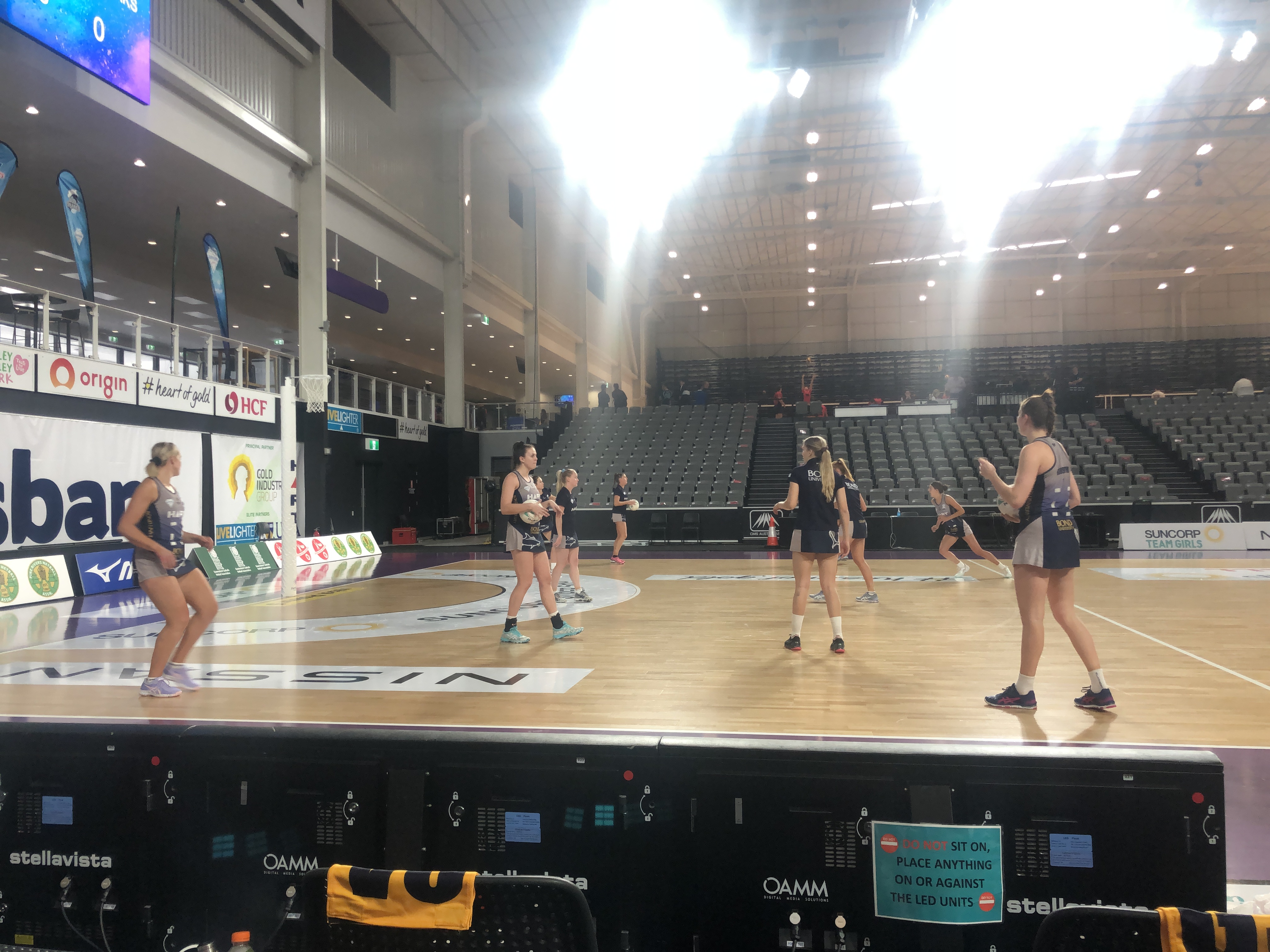
Since the program began in February 2020, six interns have been engaged across four sports (Rugby, Netball, Swimming and AFL) working with over 150 athletes to enhance their physical and tactical abilities so they can improve as players and as a team. As the interns, athletes and coaches grow in capacity, the program continues to go from strength to strength with athletes engaged in state and national talent pathways using the data collected to improve their performance on and off the playing arena.

Each sport has its own data collection processes and reporting mechanisms given the context of each club environment. Both individual and team experience, ability and goals are factors that are considered before implementing a data collection process with the goal of each program being to enhance the data literacy of students, players and coaches so students and coaches can help deliver strategies to improve a player’s performance and players themselves can self-regulate their own habits to optimize their own performance in their sport. Therefore, designing a bespoke program for each team we work with has been crucial in building this program with dividends beginning to show. Generally, each program delivers feedback about performance (game statistics or set times), physiology (sRPE, GPS, Heart Rate) and wellness (soreness, sleep, mental and physical fatigue) as well as delivering educational sessions helping individuals develop a toolbox of strategies they can use to help them perform at an optimal level.

Whilst the program is in its infancy, some small successes have emerged.

  •  Bond Rugby
    • Players who are in talent pathways are literate in GPS and RPE loading therefore can discuss their loads with coaches and practitioners which has enabled greater management of their load so they can prevent injury
    • An intern working with coaches has developed a heat management plan which is being rolled out across Rugby and AFL. Additionally, a “session external load calculator” has been created which calculates the mean ± standard deviation of distance and high-speed running (20+ km/h) of each drill so coaches have more control over the loading of their players
    • AoN Women’s 7s players who participated in a pilot program in 2019 have asked for a more diverse and comprehensive program in 2020 as they felt the program added value to their experience and gave them additional aspects of the game to focus on whilst playing.
    • QAS-contracted player used data collected in our program in 2019 through rehabilitation practices in 2020
    • Data collected and fed-back to players has been described as “invaluable” by coaching staff
  • Bond AFL
    • The collection of rotations data allowed for the effective management (maximal playing time in critical quarters) of an AFLW contracted player who required a certain amount of game-time
  • Bullsharks Netball
    • Regular use of game statistics, training load and wellness data has assisted coached in developing player performance feedback, player management and load management
    • Use of consistent game statistics measures across U16s, U18s, Ruby and Sapphire, allowing for a development of knowledge in younger athletes so they can optimize performance when they get selected in higher squads
    • Regular feedback of AMS data to talent pathway players help to develop their abilities to self-regulate load and have meaningful conversations with pathway staff
    • Use of bar velocity feedback in the gym aids in developing a focus on velocity through power movements
  • Bond Swimming
    • Athlete management system fed back every ~4 weeks via educational workshops and interventions (sleep extension and hygiene) concerning the data collected (sleep, mental fatigue, set times)
    • Development of pacing strategies white paper by intern allowed for coaching development about the published knowledge base
    • Ongoing presence on pool-deck combined with education has increased swimmer engagement and habits (increased sleep duration + recovery)  
    • Student project opportunities have been established which allow the application of skills developed in undergraduate subjects in real-life
  • Subject Integration
    • One project has been developed and will be executed in the September semester in collaboration with Faculty with plans for more as capacity within the program increases

Overall as we head towards 2021, the sport science internship program offers students, athletes and coaches the opportunity to develop their skills and knowledge using the most up-to-date information available. With the introduction of Edge10 software in 2021 to supplement the current structures in place, the program is beginning to develop into an experience that is difficult to match across university sport for all stakeholders.

Student becomes the teacher

April 2020 – COVID19 – this won’t be about that but just so we’re clear on the context, that’s what it is. Today is a Friday – it feels like a Saturday. Or a Tuesday in undergrad. Or any day if you’re unemployed. No wonder people without a job find it difficult to get one. It’s difficult to do anything without a purpose.

Photo by Startup Stock Photos on Pexels.com

Now my mild depression is a slippery slope so we’ll stray away from that. Instead we’ll focus on the win for the day. Today was the first group Zoom meeting for the Bond Sport Science Internship Program. What is the Bond Sport Science Internship Program? It’s a program that has been set up by the university whereby students in 1st and 2nd year get hands on experience servicing a sport, led by yours truly. Is it a distraction from my Masters? Probably. Is it an opportunity to build something long term? Absolutely.

We had our first Zoom today and we discussed a variety of things. Firstly, the students all seem to have adjusted in a seemingly nonchalant way to “remote” learning despite there being individual challenges for each of them like distance from family + too much family. Not that doing an online exam was their cup of tea but it seemed to be going ok. I often forget that for the first-years it’s their first semester and they’re not sure what the experience looks like. It was good to put them at ease today with their questions and concerns generally. Overall the feedback about the program was positive – no one had any concerns that weren’t manageable – many negatives were due to people not understanding the shared responsibility they all had (not being busy enough/having anything to do) or the season being cancelled before the first round (not having a game-day experience). Those can easily be fixed in due course. In the back of my mind I know I’m going to have to coach the “this is cool” out of them and fixate on the “this is work” but for now I’m happy with where the program is at.

For the next few weeks their focus will be on the White Paper projects – that is they are building what the Bond Sport standards will be in regards to servicing for each different topic in the tables below.

1st Year
HealthInjury PreventionGameday AidsRecoveryPhysiological ChallengesSkill Acquisition
Sleep  

Soreness
Biomechanical challenges in competition (1 WP/Sport)  CaffeinePost Training/Game Physiology – what are we recovering from? (1 WP/Sport)Game Demands (Energy Systems) (1 WP/Sport)Group Training Sessions – Effective Coaching Feedback
1st Year White Paper Topics – 1 WP/Sport = 1 paper per sport
2nd Year
HealthInjury PreventionGameday AidsRecoveryPhysiological ChallengesSkill Acquisition
* Training/Game Carbohydrate Ingestion
* Training/Game Protein Ingestion
* Mental Fatigue
* Illness and Training + Competition  
* Menstrual Cycle + Performance
* Load Management – how much is too much (excluding ACWR) – (1 WP/Sport)  * Cooling (readjust Rugby to new format) * Hydration* Modalities – which works best? (1 WP/Sport)* Competition Demands (Pacing + Performance Determinants) (S)  
* Growth + Development (Men)  
* Growth + Development (Female)  
* Training practices to improve key competition skills (1 WP/Sport)    
2nd Year White Paper Topics – 1 WP/Sport = 1 paper per sport

I’m so excited for this project. If it’s completed correctly, we will have a collection of documents that will be able to be used as part of coach and player education resources for Bond Sport in years to come developed by students and then used by the sports. It’s incredible the potential that this project has. Each of them are required to finish at least 1 paper by the start of semester 3 but I’m going to try to push each of them to finish as many as possible – let’s hope the standard is up to scratch. Ideally we’ll have a document for each topic by the end of the year and we can start 2021 with all the information that we need to deliver quality programs to all sports!

I think the weirdest part of this process is that sometimes I feel like I’m still one of them. I think there’s a part of me who still wants to be them, to have little responsibility and not have to be a teacher but I know that to do the best job I can, I can’t intentionally cloud that perception. I also think the fact that they’re writing things down when I speak makes me feel a little odd – I don’t feel like I should be seen as someone with knowledge that deserves to be written down. I wonder whether that feeling will ever go away or whether it will end up becoming more a me now to high school students relationship where there’s a clear gap but generationally we’re quite similar.

Time will tell whether I’m up to scratch. I think I am. I’ve designed and delivered this program from the start to now and it’s going gangbusters. We have engaged students, good projects and engaged sports. We now need champion players and we’ll have the whole package – a system that delivers elite performers. That’s the dream. That’s the goal. That’s my focus.

Gold Coast Suns Women’s First Home Game – January and February 2020 in perspective

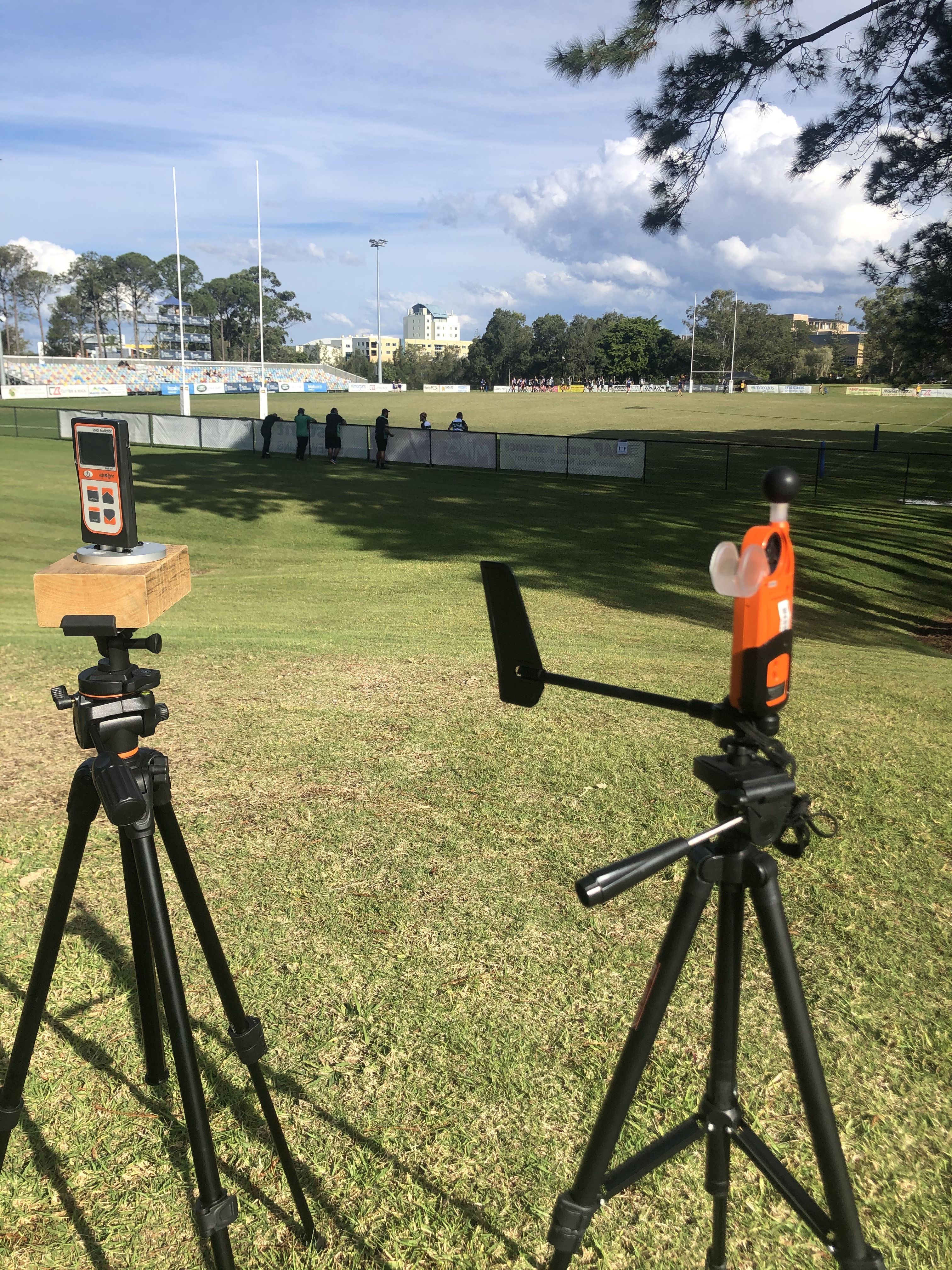
My life has been flipped on its head (again) in the past month and a half – that is 6 weeks since the new year. There has been 6 data collection opportunities, testing 11 athletes across 2 different sports collecting up to 9 variables at a time and using a variety of different pieces of equipment. I’ve missed some data (solar radiation – IDIOT) and I’m behind in my entry but I’m doing it. I’m being a scientist and it’s AWESOME. We’re getting to a conclusion with swimming and with triathlon I need to keep hounding to get people but we’ll get there. We have to get there because it’s the only project that has some sort of control. n = 9/10 will get us there. In addition, working with Robina High School I’ve seen students move from immature to mature, get stronger, work harder and be better than ever before. Every time I enter the gym is an opportunity for me to get them to be better – the joy they get when they do get better is incredible and I can’t wait to celebrate many new PBs as they get better at what they do – BUILDING BEASTS!

In terms of a job – tutoring is back and giving me so much cash. Also the mentoring aspect of working in Bond Rugby which has now opened up to Bond Sport has got me good – I’m working with all sports to get them the best support possible and it’s going to be great. Having hard workers around me and seeing them work to make the sports better and add value will make both Bond Sport and SPEX better and I love the work – at this point in time I think I’m in the best space I possibly could be. I have great friends around me, I’m busy and doing what I love – the only better thing would be the financial stability of having a job and weaning myself off mum but when I do the math the finances of my current situation work out – JUST. It’ll do for now at least. Just need to keep working and doing a good job at all that I do – that includes my masters as well as Bond Sport work and tutoring/RSHS work.

I’m in a bit of a reflective mood as I just came back from the AFLW game at Metricon stadium – 7000 fans screaming and getting the Suns across the line – being proud to see the girls win a game. They’re fit, they tackle well, they’re happy and most importantly they’re approachable – they are humble humans who love being involved – no better example is Kate Surman who I met tonight at Grill’d just chomping on a burger after her win – she was super chill and an absolute legend. I’m so excited to follow their journey as they keep getting through rounds of the season.

Does the concept of science fit into a sport organisation? My answer as it stands in 2019

At the start of this year I was so excited to begin research – I’m still excited now, 10 months on and a week before my first data collection but now I’m more aware of the realities of my situation. I’m in a position where I know that the data that I collect won’t answer a question completely but it’ll provide some information that can help answer a problem to a certain extent. That’s the life of a scientist, provide one piece of information one step at a time until the complete puzzle is as close to be solved. I’m also in a position where I’ve seen data being collected over a long period in time and have attempted to help it inform practice in the form of both exercise prescription and coaching philosophies. It’s been an interesting year witnessing the realities of organising and managing various data collection processes and it has challenged me in my ability to work as a scientist and manager both of myself and other people. Reconciling that scientific process to the reality in sport which is, teams want to win and data wants to be observed in real time has been one of the challenges that I’ve struggled with the most. You see, as I see it, science is a discipline whose sole responsibility is to collect valid and reliable data that will help answer a research question which will help increase the understanding of a certain phenomenon that can be observed. There’s a couple of points I want to elaborate on pertaining to that point.

The first is science relies on observation of a phenomenon/test/result as well as the observation of factors that lead to that result in order to draw a connection between the two. Sport is a place where uncertainty reigns supreme and variability is high – performance and physiology are both dictated by so many factors that I think it seems silly to try to collect data on them all to observe all the factors – but some teams try to? I’d imagine trying to find the differences through the noise would be draining – Creatine kinase before training, functional movement screens, immunological assessment – I don’t actually think it’s worth the investment of time. Also surely these assessments would have collinearity – the body’s processes don’t choose to turn off one by one when fatigued or adapting, it’s a holistic physiological shift. Then there’s the resources issue. I saw a paper recently citing heat shock proteins could be used as an exercise monitoring tool but unfortunately access to ELISAs regularly that are reliable can be draining on a budget. I haven’t read enough papers or seen a large, regular (daily) testing battery in action to know for sure but knowing what I know about the limited work we do at Bond University Rugby Club, and the effort it takes to draw reasonable conclusions about each player for coaches and athletes to understand, I don’t think that good science in sport is founded on having a large variety of data collected. Instead I feel that concentrated projects and tactical data collection with a clear purpose may be where science has it’s best place in a sporting organisation but I’ll get to that soon.

The second point about science is that we rely on seeing patterns happening repeatedly to gain a reasonable conclusion – we live and die on the premise that what we observe must be reliable to apply it generally to those who we work with. Yet the best performers are outliers and perform ridiculous things when asked of them – that’s why people love sport, the players or athletes always push the boundaries of how good is the best and if we’re not encouraging that we lose out in our performance goals. We’re looking to push all athletes into the 5% that are away from the herd – the significant few (one tailed) if you will. And then when they’re there we’re pushing them even further up again – now into the 5% of their peers again. So a general solution in this case could be a bad solution – to be repeatable means to be repeatably average and average doesn’t win matches. Training plans (worst case scenarios, conditioning prescription) based off average data or prescribed based on average data will either overtrain or undertrain athletes unless you sit on the average. So switching to accept that theoretically everyone is a case study is probably a good step for a scientist – this is generally accepted in the profession but I haven’t read or seen a system where this is executed particularly well – I’m sure they’re out there and I just need to find them to learn how to do it but it’s difficult to source examples of this unless you work for these organisations. Additionally, if we’re trying to gather data to help understand what leads to peak performance, we need to understand that even individually the case study extends to adaptation and fatigue right? So a linear/exponential/any traditional model will not predict much unless we know how someone profiled similarly to the athlete that we have has responded to certain stimuli or unless someone sits close to the average? So how can we quantify that, quickly, efficiently and without collecting too much data for a long period of time and then manage it, providing feedback for those who need it? The answer, I feel, is that we may not be able to – I also feel the answer definitely doesn’t lie in more information – it lies in targeted analysis which takes time, brain power and skills to accomplish and occurs at a slow pace. In a world where information needs to be readily available (or it seems that it needs to be) and an industry where “the edge” is searched for continuously, science, being the patient, slow beast may be a little out of place. Unless the organisation is patient, slow and understands that some questions may not be answered in 2 years let alone 5.

I’m starting to ask myself whether I as a scientist am approaching the way I work all wrong. I’m the first to put my hand up and say I am so fresh into this world that I have only a limited idea of what I should be doing. Even still, I know the work that I’ve done – hydration work on game days, session RPEs, countermovement jump data collection and analyses, performance analysis week to week has been received well by coaching staff. I’m just struggling a little to understand how to communicate the challenges I’ve outlined above to those who I work with – even if I do say this stuff, I don’t know whether it dilutes the “product” I’m selling – if it does dilute my value then I feel like the product that management wants is not the product that we can provide as scientists no matter what level of sport you work in.

I write this as someone who’s just starting to realise how broad sport science as a discipline is but also how young it is in the context of a discipline as well. As far as I know, since 2010 the idea of science in sport has become so popular that it seems to be chased as a cool thing to do with little or no understanding of how the gadgets and gizmos relate to training and game performance – am I wrong? Is there a system where the science has been integrated into an organisation to allow for long term realisation of answers to general questions plus short term servicing tests that helps feed data back to management and athletes in a responsible way? I’d love to know what it looks like if there is one.

I feel like there’s a couple of things I’m going to do to get at these issues I have with science in sport – whether they’re the right call or not we’ll have to wait and see. The first is ensure that the program that I’m working with now endeavours to set up a sport science arm that answers both small and big questions – what I mean by that is we endeavour to collect longitudinal data that we know relates to either physiology, performance or biomechanics in contexts that we want them to excel in for example anaerobic performance under fatigue, decision making under fatigue or aerobic performance at a particular intensity. Whatever benchmarks the club sets, my job will be to have a test, record the results and report areas where we excel or areas where we may require more work. We will attempt to maximise (NOT OPTIMISE) the capacity of our athletes across all those parameters. In the short term the goal is simple – give coaches the data that they need to review each game and then S+C coach the data they need to program a week so that players are overloaded at a stimulus that increases their capacity over time. These outcomes will need to be discussed but as the keeper of the data (should be an official title – not sport scientist) I think that’s a reasonable goal to have considering the challenges I’ve outlined above. I’m not sure if it’s the right start or not but it’s a start – as I endeavour to understand more about data I will expand on the analysis that I can undertake but for now, this system will have to do.